Python And Google Sheets - To translate this pseudocode into python you would need to know the data structures being. Moreover in python 2 there was <> operator which used to do the same thing, but it. To get only the command line arguments (not including the name of the python file) import sys sys.argv[1:] the [1:] is a slice starting from the. 'dataframe' object has no attribute. 1 you can use the != operator to check for inequality. In python this is simply =. I am trying to append a dictionary to a dataframe object, but i get the following error:
I am trying to append a dictionary to a dataframe object, but i get the following error: Moreover in python 2 there was <> operator which used to do the same thing, but it. To get only the command line arguments (not including the name of the python file) import sys sys.argv[1:] the [1:] is a slice starting from the. To translate this pseudocode into python you would need to know the data structures being. 'dataframe' object has no attribute. In python this is simply =. 1 you can use the != operator to check for inequality.
'dataframe' object has no attribute. I am trying to append a dictionary to a dataframe object, but i get the following error: To get only the command line arguments (not including the name of the python file) import sys sys.argv[1:] the [1:] is a slice starting from the. In python this is simply =. To translate this pseudocode into python you would need to know the data structures being. 1 you can use the != operator to check for inequality. Moreover in python 2 there was <> operator which used to do the same thing, but it.
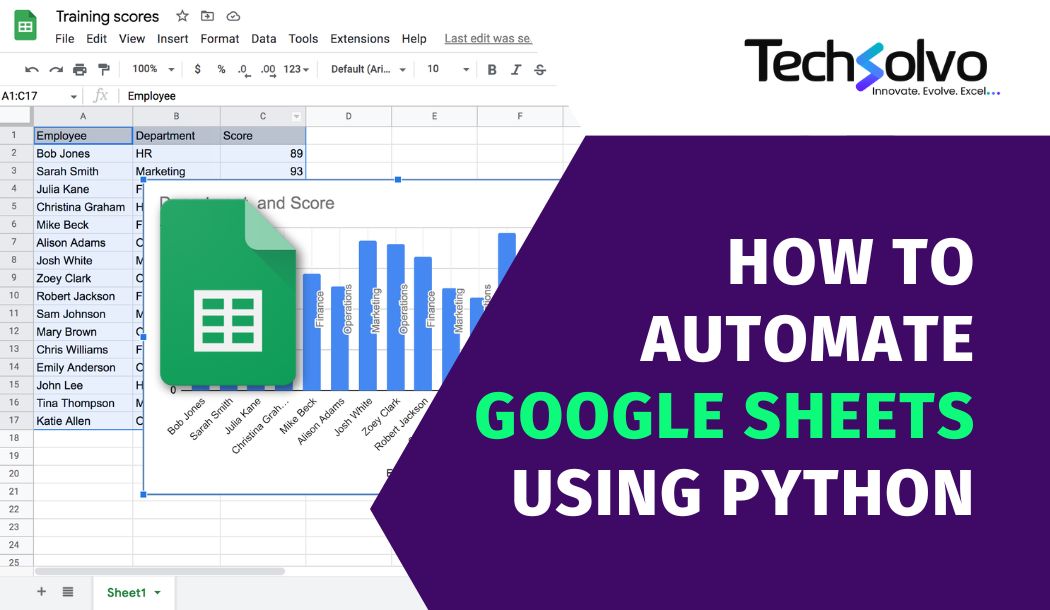
How to Automate Google Sheets using Python
Moreover in python 2 there was <> operator which used to do the same thing, but it. I am trying to append a dictionary to a dataframe object, but i get the following error: In python this is simply =. To translate this pseudocode into python you would need to know the data structures being. 1 you can use the.

How to Use Python to Automate Google Sheets? (2024 Edition)
To translate this pseudocode into python you would need to know the data structures being. In python this is simply =. To get only the command line arguments (not including the name of the python file) import sys sys.argv[1:] the [1:] is a slice starting from the. 1 you can use the != operator to check for inequality. 'dataframe' object.

How to Use Python with Google Sheets (Easy Guide) YouTube
To get only the command line arguments (not including the name of the python file) import sys sys.argv[1:] the [1:] is a slice starting from the. 'dataframe' object has no attribute. To translate this pseudocode into python you would need to know the data structures being. I am trying to append a dictionary to a dataframe object, but i get.

Using Google Sheets as Database in Python
'dataframe' object has no attribute. To translate this pseudocode into python you would need to know the data structures being. I am trying to append a dictionary to a dataframe object, but i get the following error: 1 you can use the != operator to check for inequality. Moreover in python 2 there was <> operator which used to do.
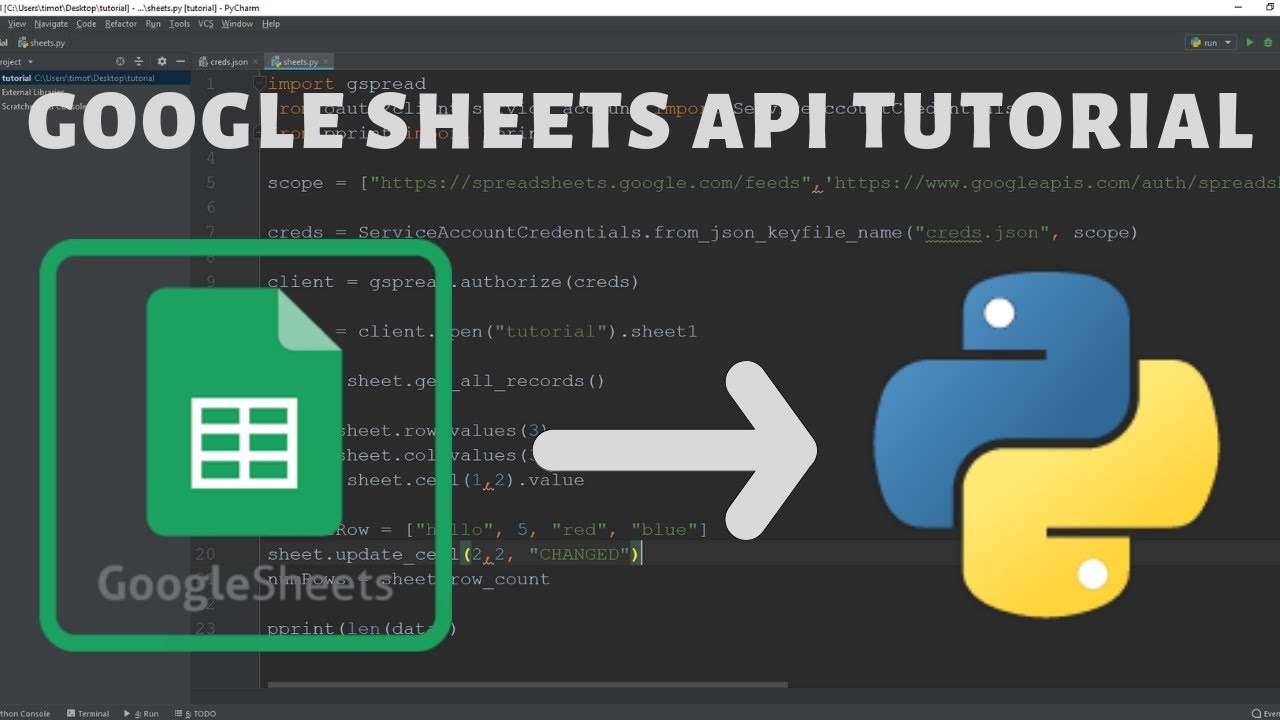
Python Google Sheets API Tutorial 2019 YouTube
To translate this pseudocode into python you would need to know the data structures being. I am trying to append a dictionary to a dataframe object, but i get the following error: To get only the command line arguments (not including the name of the python file) import sys sys.argv[1:] the [1:] is a slice starting from the. Moreover in.
【python + Google Sheets Api】Pythonで取得したデータをスプレッドシートに書き出す方法 Jose Blog
To translate this pseudocode into python you would need to know the data structures being. Moreover in python 2 there was <> operator which used to do the same thing, but it. To get only the command line arguments (not including the name of the python file) import sys sys.argv[1:] the [1:] is a slice starting from the. I am.

The Comprehensive Guide To Google Sheets With Python Just
In python this is simply =. 'dataframe' object has no attribute. To get only the command line arguments (not including the name of the python file) import sys sys.argv[1:] the [1:] is a slice starting from the. Moreover in python 2 there was <> operator which used to do the same thing, but it. I am trying to append a.
Setting up Google Sheets and Gspread for Python Codearmo
To translate this pseudocode into python you would need to know the data structures being. In python this is simply =. I am trying to append a dictionary to a dataframe object, but i get the following error: Moreover in python 2 there was <> operator which used to do the same thing, but it. 'dataframe' object has no attribute.
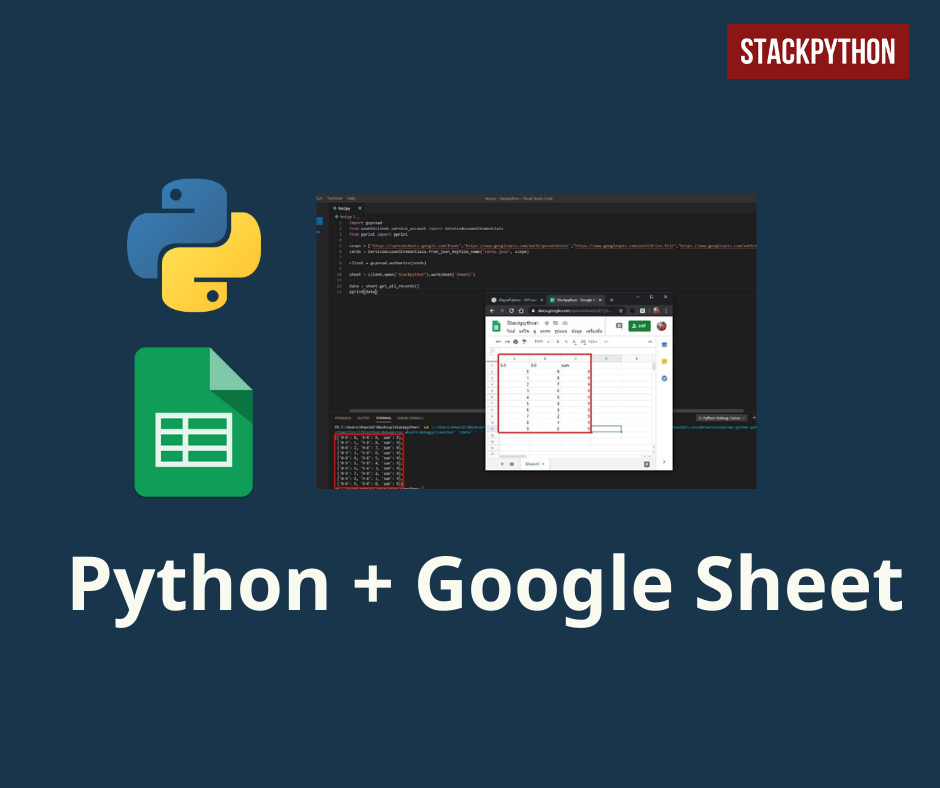
การใช้งาน Python ควบคุม Google sheet by stackpython Medium
To translate this pseudocode into python you would need to know the data structures being. 'dataframe' object has no attribute. To get only the command line arguments (not including the name of the python file) import sys sys.argv[1:] the [1:] is a slice starting from the. In python this is simply =. I am trying to append a dictionary to.
Read Google Sheets in Python with nocode MLJAR Studio
In python this is simply =. To get only the command line arguments (not including the name of the python file) import sys sys.argv[1:] the [1:] is a slice starting from the. I am trying to append a dictionary to a dataframe object, but i get the following error: To translate this pseudocode into python you would need to know.
To Get Only The Command Line Arguments (Not Including The Name Of The Python File) Import Sys Sys.argv[1:] The [1:] Is A Slice Starting From The.
In python this is simply =. Moreover in python 2 there was <> operator which used to do the same thing, but it. I am trying to append a dictionary to a dataframe object, but i get the following error: 1 you can use the != operator to check for inequality.
To Translate This Pseudocode Into Python You Would Need To Know The Data Structures Being.
'dataframe' object has no attribute.