What Does The Word Animosity Mean - See examples of does used in a sentence. Present simple of do, used with he/she/it. Does in british english (dʌz ) verb (used with a singular noun or the pronouns he, she, or it) a form of the present tense (indicative mood) of do 1 Which is the correct form to use depends on the subject of your sentence. Both do and does are present tense forms of the verb do. He/she/it form of do 3. He/she/it form of do 2.
Present simple of do, used with he/she/it. Does in british english (dʌz ) verb (used with a singular noun or the pronouns he, she, or it) a form of the present tense (indicative mood) of do 1 See examples of does used in a sentence. He/she/it form of do 3. Both do and does are present tense forms of the verb do. He/she/it form of do 2. Which is the correct form to use depends on the subject of your sentence.
Which is the correct form to use depends on the subject of your sentence. See examples of does used in a sentence. He/she/it form of do 2. Both do and does are present tense forms of the verb do. He/she/it form of do 3. Does in british english (dʌz ) verb (used with a singular noun or the pronouns he, she, or it) a form of the present tense (indicative mood) of do 1 Present simple of do, used with he/she/it.

What is the Meaning of Animosity Animosity Meaning with Example YouTube
Which is the correct form to use depends on the subject of your sentence. See examples of does used in a sentence. He/she/it form of do 2. Does in british english (dʌz ) verb (used with a singular noun or the pronouns he, she, or it) a form of the present tense (indicative mood) of do 1 He/she/it form of.

Animosity As a Problem that Makes Life Harder Symbolized by a Person
He/she/it form of do 3. Present simple of do, used with he/she/it. See examples of does used in a sentence. Which is the correct form to use depends on the subject of your sentence. Both do and does are present tense forms of the verb do.

What is the meaning of the word ANIMOSITY? YouTube
Present simple of do, used with he/she/it. Which is the correct form to use depends on the subject of your sentence. Both do and does are present tense forms of the verb do. Does in british english (dʌz ) verb (used with a singular noun or the pronouns he, she, or it) a form of the present tense (indicative mood).
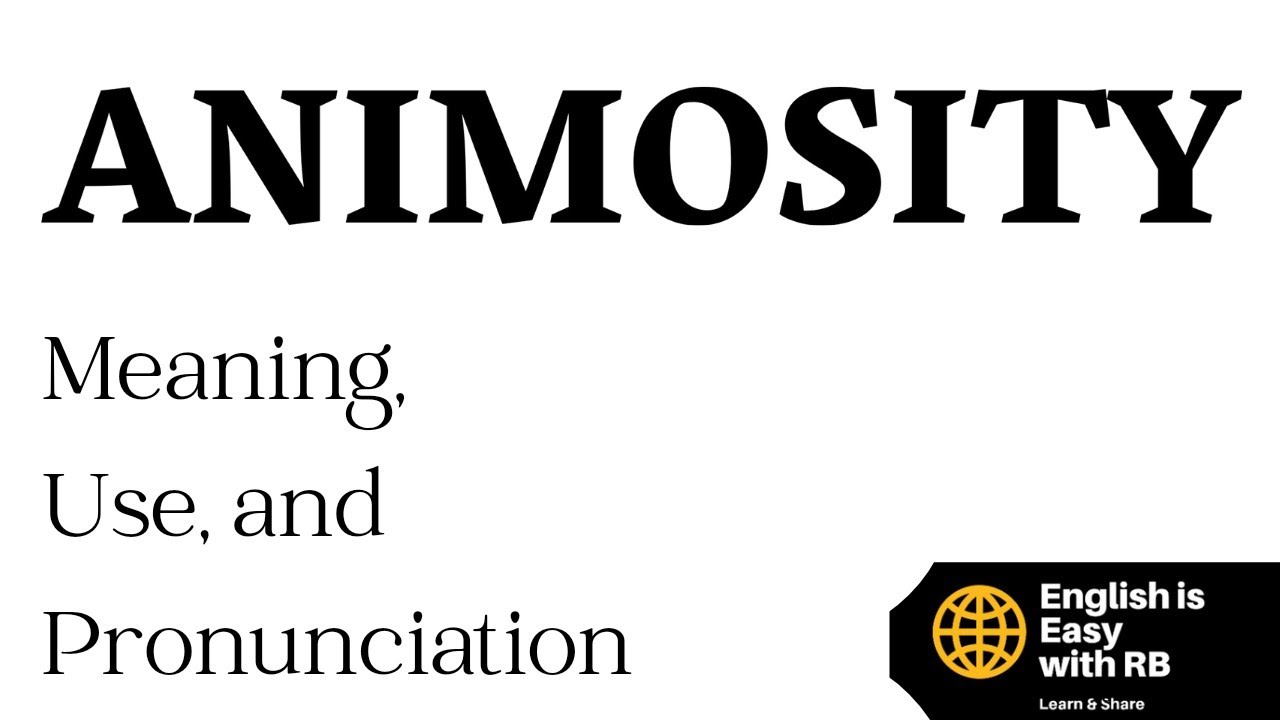
ANIMOSITY MEANING ANIMOSITY PRONUNCIATION ANIMOSITY USE
Both do and does are present tense forms of the verb do. See examples of does used in a sentence. Present simple of do, used with he/she/it. Does in british english (dʌz ) verb (used with a singular noun or the pronouns he, she, or it) a form of the present tense (indicative mood) of do 1 Which is the.

Animosity Meaning Pronunciation Word Wor(l)d Audio Video
Present simple of do, used with he/she/it. Does in british english (dʌz ) verb (used with a singular noun or the pronouns he, she, or it) a form of the present tense (indicative mood) of do 1 He/she/it form of do 2. Both do and does are present tense forms of the verb do. Which is the correct form to.
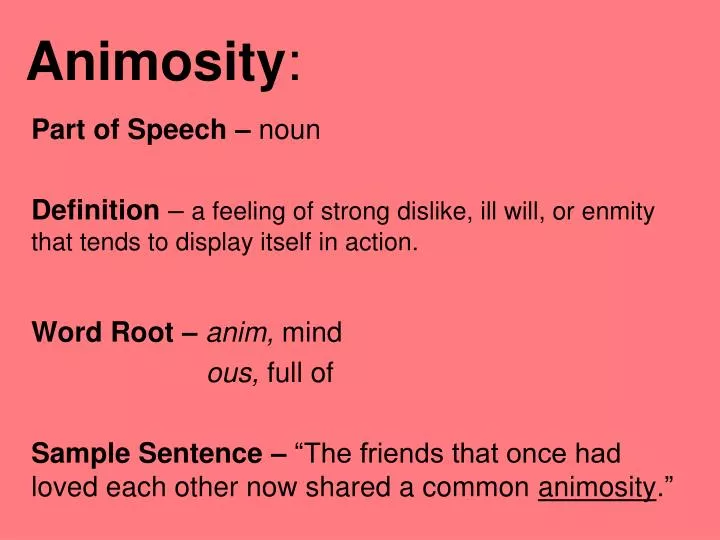
PPT Animosity PowerPoint Presentation, free download ID4211876
He/she/it form of do 3. Which is the correct form to use depends on the subject of your sentence. Both do and does are present tense forms of the verb do. Present simple of do, used with he/she/it. See examples of does used in a sentence.

Animosity meaning Animosity pronunciation Animosity example
See examples of does used in a sentence. He/she/it form of do 2. He/she/it form of do 3. Present simple of do, used with he/she/it. Does in british english (dʌz ) verb (used with a singular noun or the pronouns he, she, or it) a form of the present tense (indicative mood) of do 1

Animosity definition of ANIMOSITY YouTube
Both do and does are present tense forms of the verb do. He/she/it form of do 3. Which is the correct form to use depends on the subject of your sentence. Present simple of do, used with he/she/it. See examples of does used in a sentence.

What Does ANIMOSITY Means Meanings And Definitions With Example in
Does in british english (dʌz ) verb (used with a singular noun or the pronouns he, she, or it) a form of the present tense (indicative mood) of do 1 Which is the correct form to use depends on the subject of your sentence. Both do and does are present tense forms of the verb do. See examples of does.

Meaning of animosity volfortune
See examples of does used in a sentence. Present simple of do, used with he/she/it. Both do and does are present tense forms of the verb do. Does in british english (dʌz ) verb (used with a singular noun or the pronouns he, she, or it) a form of the present tense (indicative mood) of do 1 He/she/it form of.
Which Is The Correct Form To Use Depends On The Subject Of Your Sentence.
He/she/it form of do 2. Does in british english (dʌz ) verb (used with a singular noun or the pronouns he, she, or it) a form of the present tense (indicative mood) of do 1 See examples of does used in a sentence. Present simple of do, used with he/she/it.
He/She/It Form Of Do 3.
Both do and does are present tense forms of the verb do.