What Does The Word Elitist Mean - Both do and does are present tense forms of the verb do. Does in british english (dʌz ) verb (used with a singular noun or the pronouns he, she, or it) a form of the present tense (indicative mood) of do 1 Present simple of do, used with he/she/it. See examples of does used in a sentence. Which is the correct form to use depends on the subject of your sentence. He/she/it form of do 3. He/she/it form of do 2.
Present simple of do, used with he/she/it. See examples of does used in a sentence. Which is the correct form to use depends on the subject of your sentence. Does in british english (dʌz ) verb (used with a singular noun or the pronouns he, she, or it) a form of the present tense (indicative mood) of do 1 He/she/it form of do 3. Both do and does are present tense forms of the verb do. He/she/it form of do 2.
Both do and does are present tense forms of the verb do. See examples of does used in a sentence. Which is the correct form to use depends on the subject of your sentence. Present simple of do, used with he/she/it. Does in british english (dʌz ) verb (used with a singular noun or the pronouns he, she, or it) a form of the present tense (indicative mood) of do 1 He/she/it form of do 3. He/she/it form of do 2.
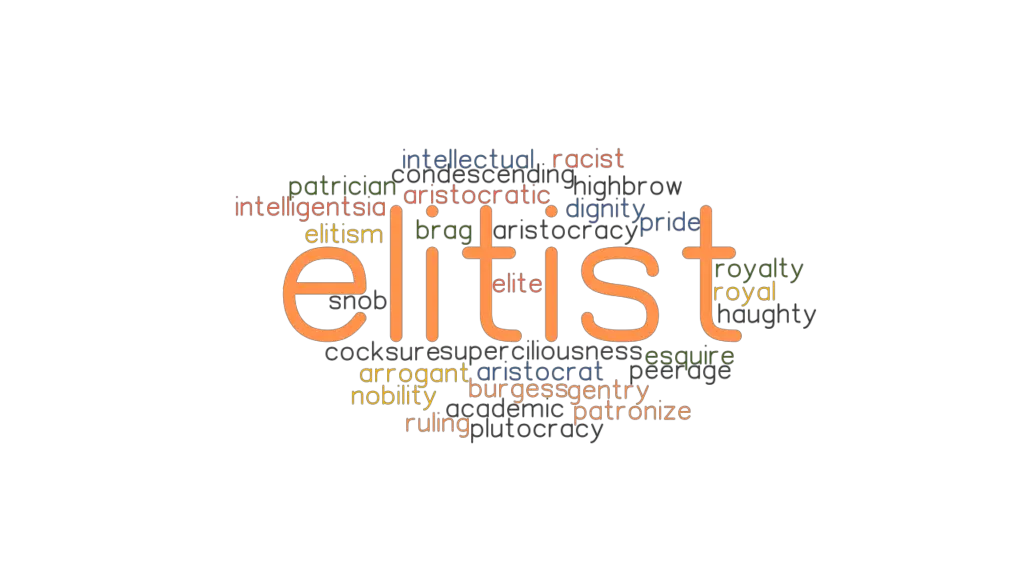
ELITIST Synonyms and Related Words. What is Another Word for ELITIST
Both do and does are present tense forms of the verb do. He/she/it form of do 2. He/she/it form of do 3. Which is the correct form to use depends on the subject of your sentence. See examples of does used in a sentence.
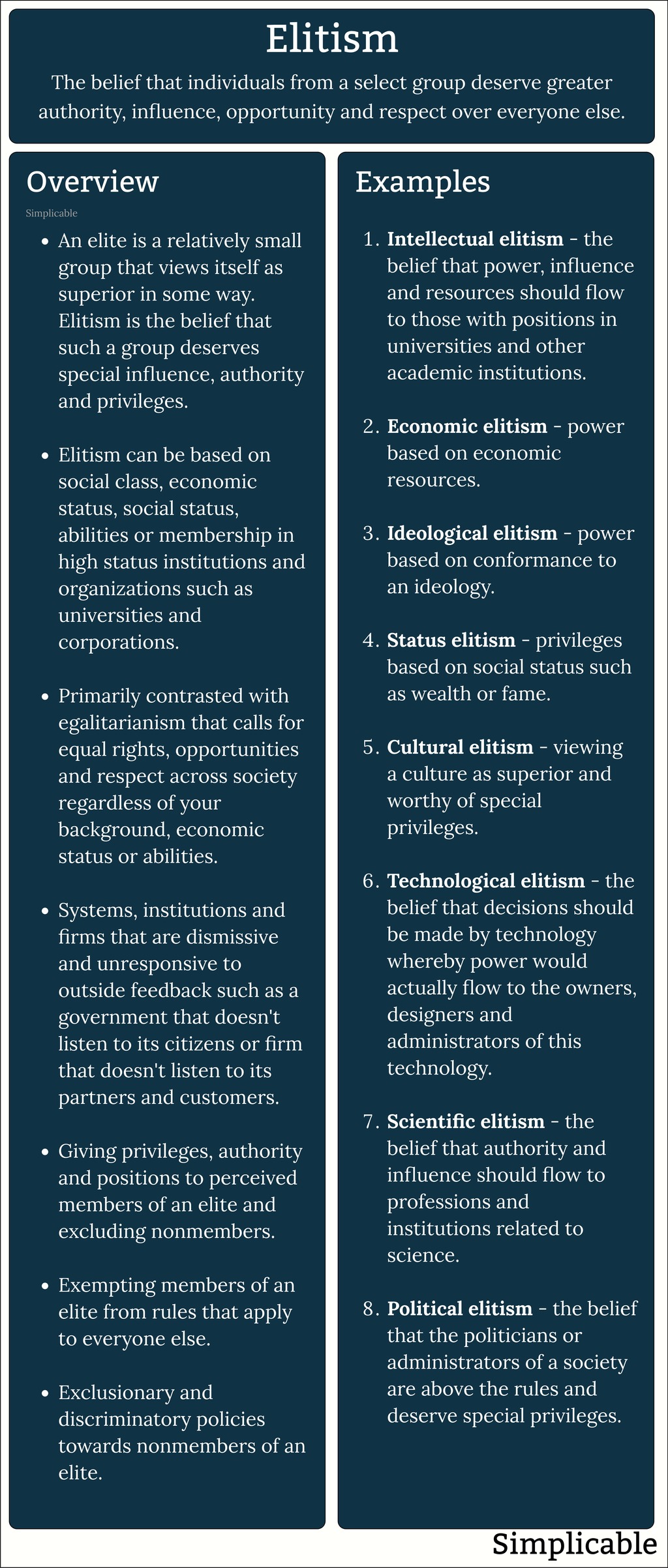
11 Examples of Elitism Simplicable
See examples of does used in a sentence. Does in british english (dʌz ) verb (used with a singular noun or the pronouns he, she, or it) a form of the present tense (indicative mood) of do 1 He/she/it form of do 3. Both do and does are present tense forms of the verb do. He/she/it form of do 2.

Pronunciation of Elitism Definition of Elitism YouTube
Does in british english (dʌz ) verb (used with a singular noun or the pronouns he, she, or it) a form of the present tense (indicative mood) of do 1 Both do and does are present tense forms of the verb do. He/she/it form of do 2. Which is the correct form to use depends on the subject of your.

Elitism là gì? Tìm hiểu về Elitism và cách sử dụng từ trong tiếng Anh
He/she/it form of do 3. Which is the correct form to use depends on the subject of your sentence. He/she/it form of do 2. Does in british english (dʌz ) verb (used with a singular noun or the pronouns he, she, or it) a form of the present tense (indicative mood) of do 1 See examples of does used in.

Political and Economic Institutions ppt download
See examples of does used in a sentence. Present simple of do, used with he/she/it. Which is the correct form to use depends on the subject of your sentence. Does in british english (dʌz ) verb (used with a singular noun or the pronouns he, she, or it) a form of the present tense (indicative mood) of do 1 He/she/it.
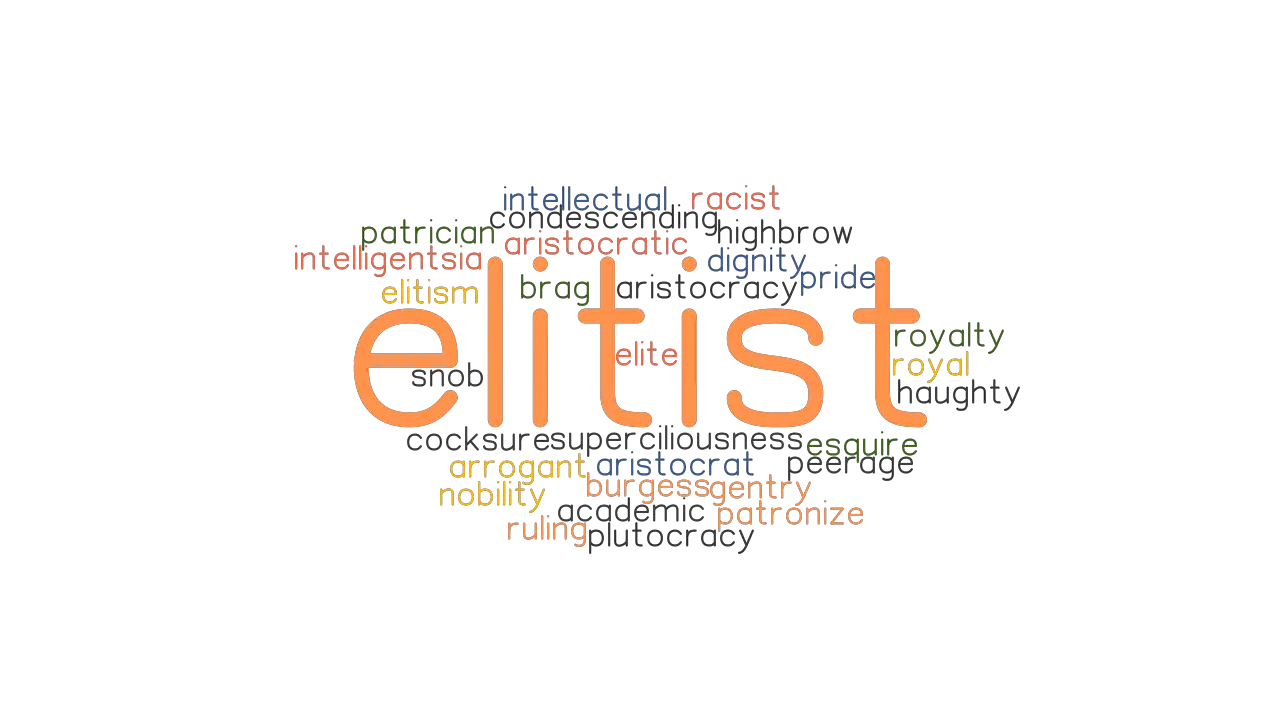
ELITIST Synonyms and Related Words. What is Another Word for ELITIST
Does in british english (dʌz ) verb (used with a singular noun or the pronouns he, she, or it) a form of the present tense (indicative mood) of do 1 He/she/it form of do 3. Which is the correct form to use depends on the subject of your sentence. Both do and does are present tense forms of the verb.
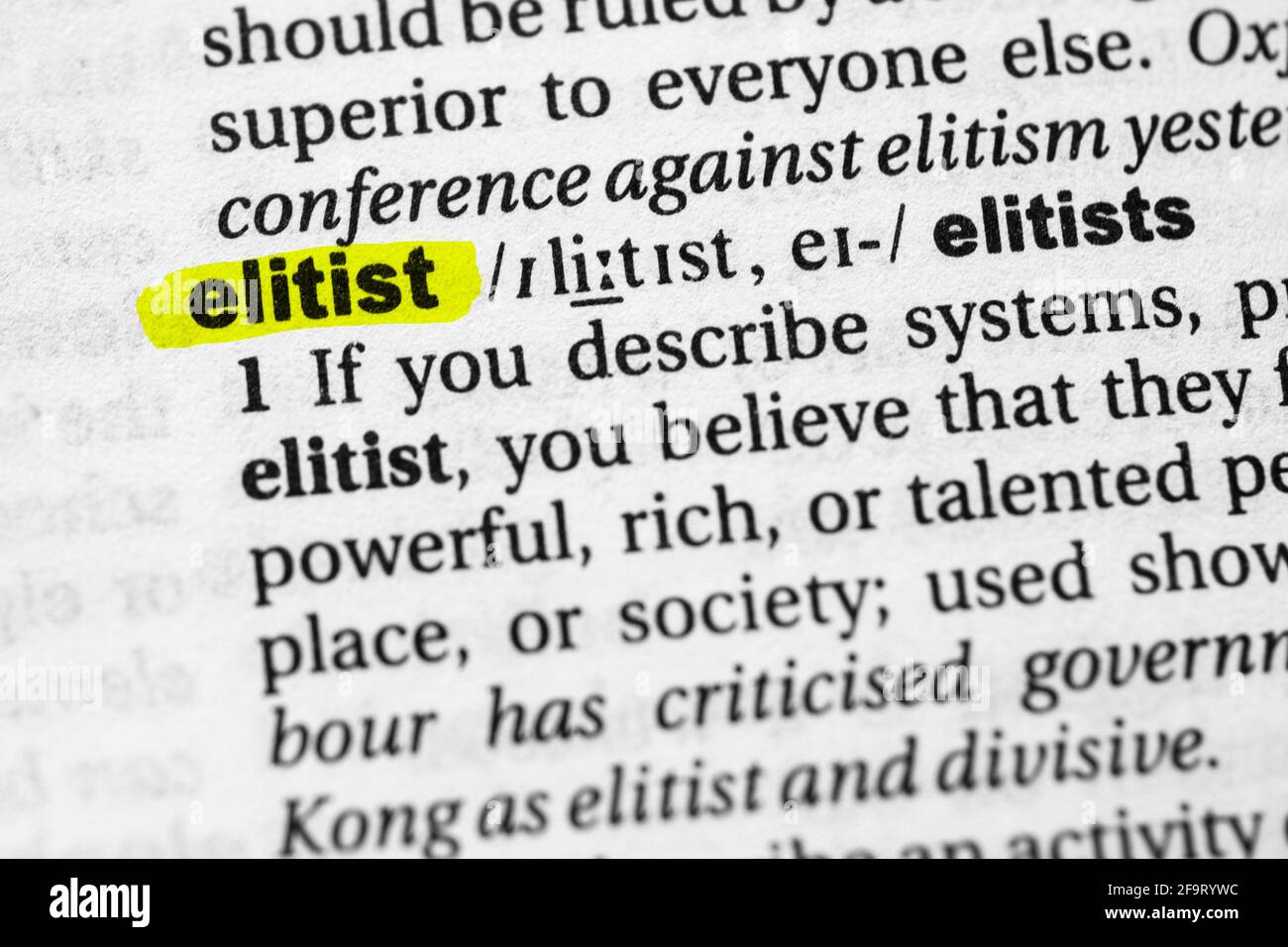
Highlighted word elitist concept and meaning Stock Photo Alamy
Present simple of do, used with he/she/it. Does in british english (dʌz ) verb (used with a singular noun or the pronouns he, she, or it) a form of the present tense (indicative mood) of do 1 He/she/it form of do 3. See examples of does used in a sentence. Both do and does are present tense forms of the.

What does Elitist mean? YouTube
Present simple of do, used with he/she/it. He/she/it form of do 2. Which is the correct form to use depends on the subject of your sentence. Both do and does are present tense forms of the verb do. Does in british english (dʌz ) verb (used with a singular noun or the pronouns he, she, or it) a form of.

Elitist meaning of Elitist YouTube
Does in british english (dʌz ) verb (used with a singular noun or the pronouns he, she, or it) a form of the present tense (indicative mood) of do 1 He/she/it form of do 3. Which is the correct form to use depends on the subject of your sentence. Present simple of do, used with he/she/it. He/she/it form of do.

Interest Groups Theory and Practice ppt download
Which is the correct form to use depends on the subject of your sentence. Present simple of do, used with he/she/it. Does in british english (dʌz ) verb (used with a singular noun or the pronouns he, she, or it) a form of the present tense (indicative mood) of do 1 Both do and does are present tense forms of.
See Examples Of Does Used In A Sentence.
He/she/it form of do 2. Which is the correct form to use depends on the subject of your sentence. He/she/it form of do 3. Does in british english (dʌz ) verb (used with a singular noun or the pronouns he, she, or it) a form of the present tense (indicative mood) of do 1
Present Simple Of Do, Used With He/She/It.
Both do and does are present tense forms of the verb do.