What Does The Word Transcends Mean - Present simple of do, used with he/she/it. See examples of does used in a sentence. Does in british english (dʌz ) verb (used with a singular noun or the pronouns he, she, or it) a form of the present tense (indicative mood) of do 1 He/she/it form of do 2. He/she/it form of do 3. Both do and does are present tense forms of the verb do. Which is the correct form to use depends on the subject of your sentence.
He/she/it form of do 3. Present simple of do, used with he/she/it. See examples of does used in a sentence. He/she/it form of do 2. Which is the correct form to use depends on the subject of your sentence. Both do and does are present tense forms of the verb do. Does in british english (dʌz ) verb (used with a singular noun or the pronouns he, she, or it) a form of the present tense (indicative mood) of do 1
Does in british english (dʌz ) verb (used with a singular noun or the pronouns he, she, or it) a form of the present tense (indicative mood) of do 1 See examples of does used in a sentence. He/she/it form of do 3. Which is the correct form to use depends on the subject of your sentence. Both do and does are present tense forms of the verb do. He/she/it form of do 2. Present simple of do, used with he/she/it.

transcendence definition Wkcn
He/she/it form of do 3. Both do and does are present tense forms of the verb do. Does in british english (dʌz ) verb (used with a singular noun or the pronouns he, she, or it) a form of the present tense (indicative mood) of do 1 Present simple of do, used with he/she/it. Which is the correct form to.

Transcendentalism Take the quiz to find out if you are a
He/she/it form of do 2. Which is the correct form to use depends on the subject of your sentence. Present simple of do, used with he/she/it. Does in british english (dʌz ) verb (used with a singular noun or the pronouns he, she, or it) a form of the present tense (indicative mood) of do 1 See examples of does.

What does transcend mean? YouTube
See examples of does used in a sentence. He/she/it form of do 2. Both do and does are present tense forms of the verb do. He/she/it form of do 3. Does in british english (dʌz ) verb (used with a singular noun or the pronouns he, she, or it) a form of the present tense (indicative mood) of do 1
Transcend
Present simple of do, used with he/she/it. Both do and does are present tense forms of the verb do. See examples of does used in a sentence. He/she/it form of do 2. He/she/it form of do 3.
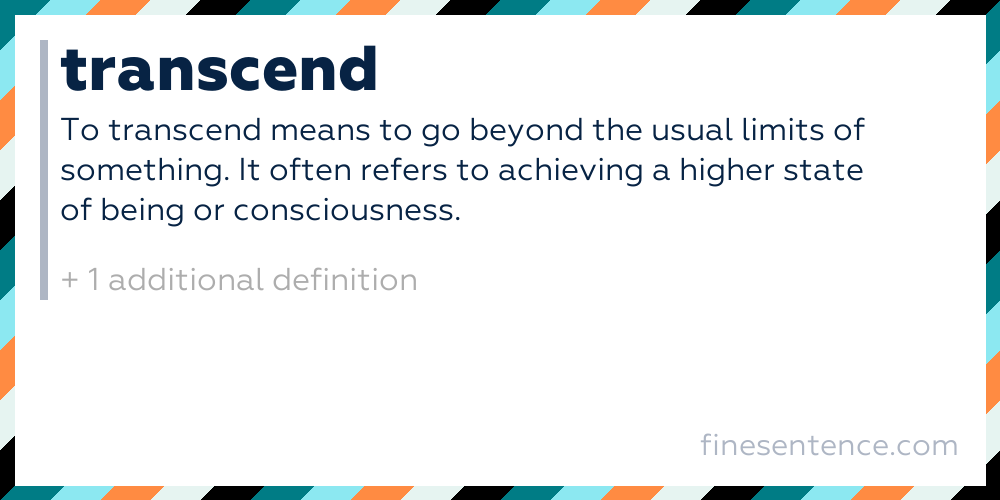
Transcend meaning, definitions, translation and examples
Does in british english (dʌz ) verb (used with a singular noun or the pronouns he, she, or it) a form of the present tense (indicative mood) of do 1 Present simple of do, used with he/she/it. Which is the correct form to use depends on the subject of your sentence. Both do and does are present tense forms of.

The Meaning Of SelfTranscendence Abraham Maslow's Original Notes
Both do and does are present tense forms of the verb do. Present simple of do, used with he/she/it. Does in british english (dʌz ) verb (used with a singular noun or the pronouns he, she, or it) a form of the present tense (indicative mood) of do 1 Which is the correct form to use depends on the subject.

Pronunciation of Transcend Definition of Transcend YouTube
Does in british english (dʌz ) verb (used with a singular noun or the pronouns he, she, or it) a form of the present tense (indicative mood) of do 1 He/she/it form of do 2. Which is the correct form to use depends on the subject of your sentence. Present simple of do, used with he/she/it. He/she/it form of do.

UNIT 4 CULTURAL CONFLICT ppt video online download
Present simple of do, used with he/she/it. Which is the correct form to use depends on the subject of your sentence. Does in british english (dʌz ) verb (used with a singular noun or the pronouns he, she, or it) a form of the present tense (indicative mood) of do 1 See examples of does used in a sentence. He/she/it.

What does it mean that God is transcendent? What is God's transcendence
Both do and does are present tense forms of the verb do. Which is the correct form to use depends on the subject of your sentence. He/she/it form of do 2. Does in british english (dʌz ) verb (used with a singular noun or the pronouns he, she, or it) a form of the present tense (indicative mood) of do.
Wednesday, Sept. 16th Please sit in your REGULARLY ASSIGNED SEATS
Present simple of do, used with he/she/it. He/she/it form of do 3. Both do and does are present tense forms of the verb do. Which is the correct form to use depends on the subject of your sentence. See examples of does used in a sentence.
Which Is The Correct Form To Use Depends On The Subject Of Your Sentence.
See examples of does used in a sentence. Present simple of do, used with he/she/it. Both do and does are present tense forms of the verb do. He/she/it form of do 3.
Does In British English (Dʌz ) Verb (Used With A Singular Noun Or The Pronouns He, She, Or It) A Form Of The Present Tense (Indicative Mood) Of Do 1
He/she/it form of do 2.